












Μετάφραση 
Avlida Lighthouse
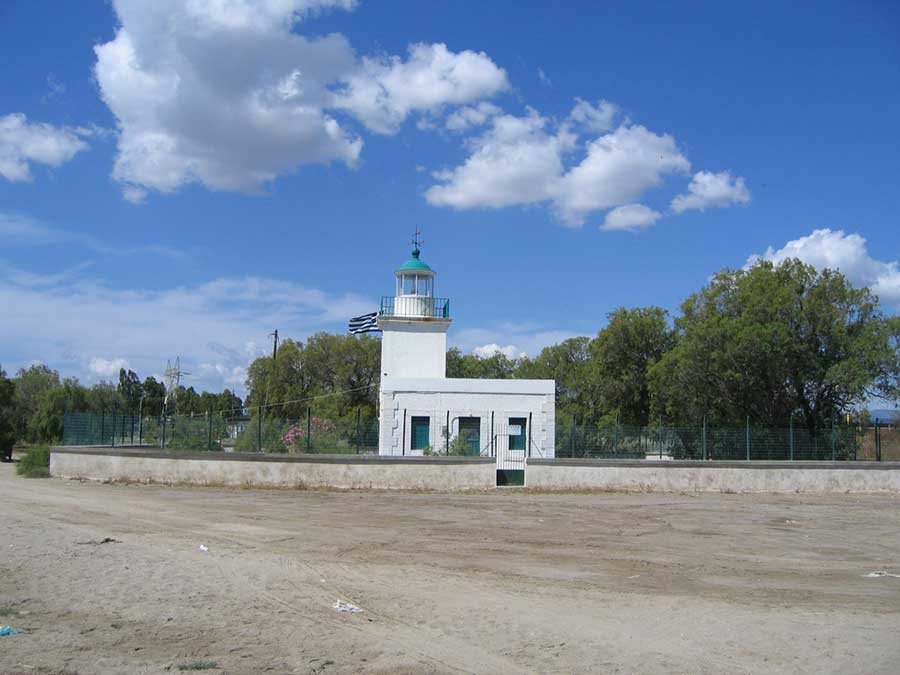
Built in 1880 by the French Lighthouse Company, Avlida Lighthouse has long guided vessels entering the southern approach of the Euripus Strait. In its early years it operated as a 6th-order dioptric lighthouse, emitting a distinctive intermittent flash visible from up to 12 nautical miles away.
Records from 1916 show that the station was staffed by three keepers—a supervisor and two assistants—reflecting its importance for safe navigation in this notoriously challenging stretch of water.
Like many Greek lighthouses, Avlida went dark during World War II and resumed operation in 1945 as part of the reconstruction of the national lighthouse network. Modernisation followed: in 1969 a temporary acetylene beacon was installed to allow electrification works to proceed, and by 1973 the lighthouse was fully powered. Since 1981 it has functioned as an automatic electric lighthouse.
Today, the Avlida Lighthouse is recognised as a protected monument of Greece’s maritime heritage and remains under the supervision of the Hellenic Navy Lighthouse Service.
Architecture
The station consists of a single-storey keeper’s house with three rooms, a kitchen, two storage areas and a small WC. The cylindrical stone tower, connected directly to the residence, rises 7 metres high with 1-metre-thick walls and a diameter of 1.6 metres—a characteristic example of late-19th-century lighthouse construction.
Access
Access to the lighthouse is straightforward via the local road network, which leads directly to its 3-metre-high perimeter fence. The nearest village, Faros Avlidas, lies about 2 km away. Just 50 metres from the site there is a small sandy beach—family-friendly, though with some seaweed—making it an easy spot to combine sightseeing with a swim.
