












Μετάφραση 
Apostle Paul’s Altar
In 168 B.C. the Romans defeated Macedonia and established Veria as the capital of one of the four republics into which the kingdom was divided. Veria became a significant cultural and religious hub, home to many Greeks and Jews. Around 50 AD., after being expelled from Thessaloniki, Apostle Paul, known as the Saint of the Nations arrived in Veria. He visited the Jewish synagogue to preach Christianity, and his message was warmly received by the city's inhabitants, resulting in many conversions. Apostle Paul visited Veria twice – the first in 50 A.D. and again in early 57 A.D. – marking the town as an important center for the early Christian faith in Greece.
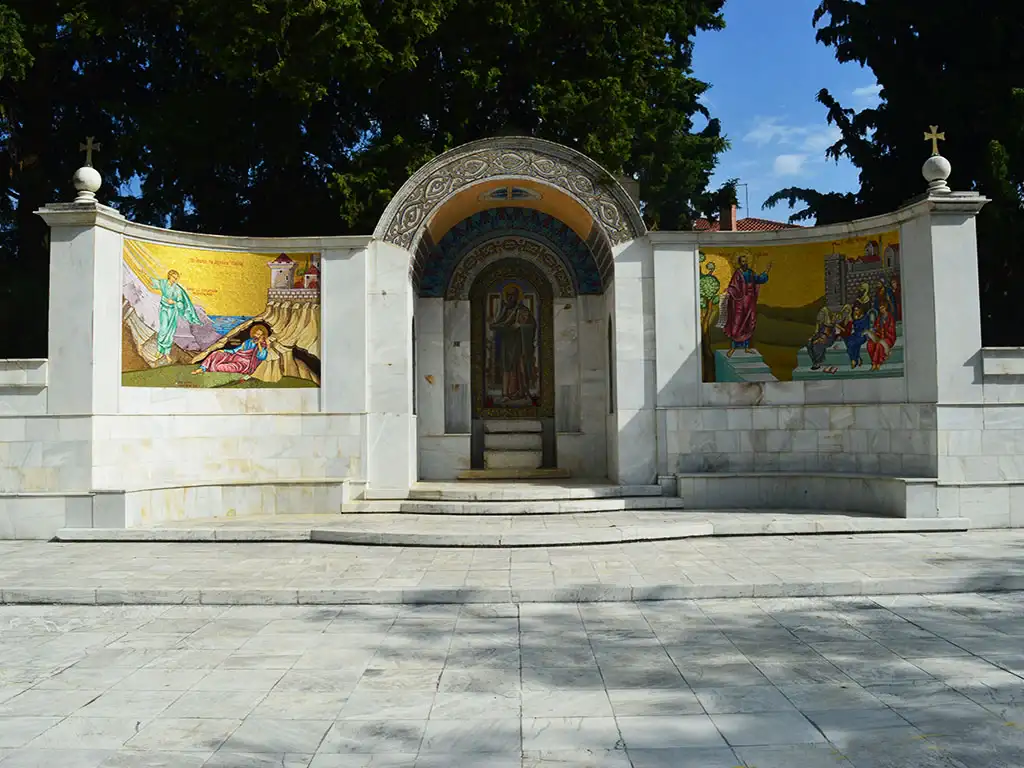
Today, a religious monument known as “The Altar of the Apostle Paul” stands at the location where he preached. This imposing monument, adorned with exquisite mosaics, serves as a powerful reminder of Apostle Paul's historical visit to Veria nearly 2,000 years ago. Located near the city center, it attracts both pilgrims and tourists. Each year on June 29, the city celebrates the festival of “Pauleia”, honoring the founder of the local church. The festival features religious, cultural, and educational events, culminating in an open-air vesper service led by the Metropolitan of Veria alongside archpriests and representatives from various Patriarchates.
Veria's connection to Apostle Paul not only underscores its role in the spread of Christianity but also highlights its rich spiritual and historical heritage, making it a key destination for those interested in religious and cultural tourism.
