











1. Livadia Tilos
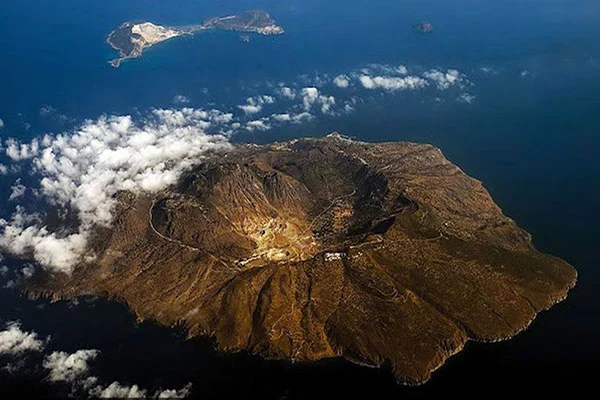
Livadia is the Tilo's main port and the largest village. The tourist resort is located on the east side of the island, 7 km south east of Megalo Chorio, the capital of Tilos. The small cute village is set in a tremendously beautiful and wide bay and has kept its traditional traits. The Tilos Police Station building at the port stands out for its architecture, reminiscent of the Italian domination of the island from 1912 until 1948. On the rocky mountaintop above the village, sits the Castle of Agriosykia for the past six hundred years, overlooking the picturesque port. Near the port is a square, a popular gathering place for both tourists and islanders, especially in the evenings.
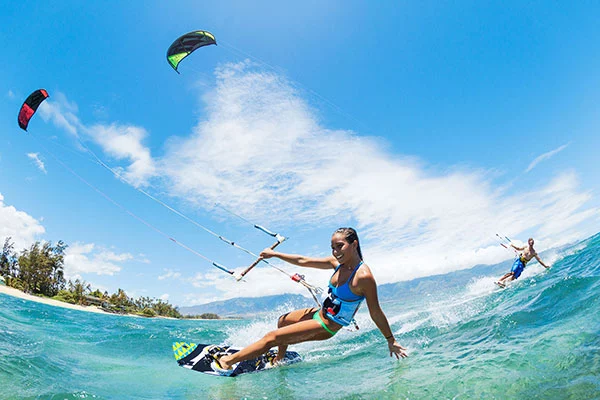
Looking eastward you can see the mountains of Turkey while on the northwest side, the island of Symi rises out of the distant background. Along the pedestrian seafront promenade a nice pebble beach stretches out with clear waters and many trees for shade. Free sun beds are offered by the cafes and taverns to its guests. Watersports are also available. There are plenty of rooms to let and multitude of small taverns where you can taste good old-fashioned Greek homely fare and fresh fish.

2. Megalo Chorio Tilos
Megalo Chorio (meaning "large village") is the capital of Tilos. It is built on the steep slopes of Agios Stefanos hill, in the northern part of the island, 7 km away from Livadia, the island’s main port. On the top of the hill, there is a medieval fortress, built by the Knights of St. John on top of the ancient acropolis. Inside there are the remains of a church, effectively the only structure still standing. There, used to stand a famous temple dedicated to the Pythian Apollo and Athena.
Until the beginning of the 18th century the entire village resided within the castle walls. It is the place where the locals took refuge when the pirates and the Turks were looting the island. It is a picturesque village with remarkable architecture that has remained intact over the years. It is worth visiting the church of Taxiarchis with the pebbled courtyard which is a real work of art. Wander the whitewashed alleys with the flower-decorated courtyards and enjoy the view over the valley of Eristos which spreads out below the village, from the main square.
Among the main attractions is the town hall, the primary school, the library, the doctor's office and the grocery store, all typical examples of traditional architecture. Near the town hall is located the unique elephant museum.

3. Mikro Chorio
A ghost-village is located alongside the main road which connects Megalo Horio to Livadia, just before the latter. It has been totally abandoned for years now, with the sole exception of a bar which attracts a lot of people at night, especially youth. During the prewar times, Mikro Horio was not small at all as it had over 750 permanent residents. They were gradually reduced by the migration to Rhodes, Athens, Australia and America and the fact that those who were left behind started moving to Livadia. Out of the 220 houses of the village the walls are preserved but not the roofs and the frames since the resettlers took them along in order to use them again.
On the hill’s peak there are the ruins of a medieval tower (it has been declared as listed monument according to the 17/24-12-1948) and if you go up there you will admire the village planning from above. The amphitheatrical formation of the single-room residents and the road network shows that it was organized in a single residential complex most probably by the Knights of Saint John in the 15th century. Below the abandoned watchtower in a much better condition, i.e. covered, white-washed and operated, the arched church of Agia Zoni is preserved, built in 1861 with an elegant bell tower. In addition, the cemetery church of the Assumption of Virgin Mary is preserved, whose walls were painted in 1787 by the hagiographer Neofytos of Symi (it has been declared as listed monument according to the 17/24-12-1948). The hagiographies of Agios Ioannis in Avalas present great interest. Pay attention to the scaly thorax of Agios Dimitrios, like that of the knights, and the unusual pattern of the representation of Paradise in its western wall.
In the recent years, a residential complex was restored in the uninhabited village. There is another abandoned village in the SE part of the island. It was called Gera and it is approximately 3 km away from Livadia. Here the residents of Mikro Horio had their agricultural veterinarian premises, exploiting the fertility of the surrounding cultivated areas and the abundant water of the nearby spring of Despotis.
