












1. Agia Marina Aegina
Agia Marina is a seaside tourist village on the east side of Aegina, in the middle of the homonymous bay. It has the most famous beach on the island, boasting the longest sandy coast almost 500 meters long. The beach is well-organized and has shallow and clear waters, perfect for families with young kids. At one end of the beach, there is the chapel of Agia Marina, which celebrates every year on July, 17th. That day a folk festival takes place in the village with food, drinks, music and dances. The village offers a large variety of food options as well as cafes, bars, shops, hotels of all budgets and rooms to let. It is the island’s most popular tourist destination, attracting huge numbers of Greek and foreign tourists every summer.
The popular resort lies 12 kilometres from Aegina Town, near the famous Sanctuary of Aphaia, one of the island’s main attractions and the country’s most significant archaeological sites. Agia Marina is directly connected to the port of Piraeus in Athens by regular ferry service. It can be the base to explore the Monastery of Agios Nekarios and the ruined town of Paleochora with the numerous churches.

2. Souvala Aegina
Souvala is a small village by the sea in the North of Aegina Island. It is a quiet and small village, easy to move around with a little sandy beach to swim. Nearby, there are other beautiful coves and beaches like Agii and Vagia as well as Loutra beach, famous for its warm therapeutic waters. The waters have healing properties for rheumatism, arthritis, dermatological and gynecological diseases.
Souvala has a crescent shaped harbor area where most of the cafes, tavernas and ouzo bars are situated. It is the second harbor of the island and is directly connected to Piraeus port all year round. The village's name derives from the big cisterns on the ground that the residents used to dig in the old days, in order to collect water for their livestock and themselves. Those cisterns, known as “souvales”, were 5-6 meters wide and just as deep. Due to its location, Souvala is conveniently close to some of the island’s most important sights like the Temple of Aphaia, the ruined medieval village of Paleochora and the church of Agios Nektarios. The village holds an annual fish festival during which grilled whitebait are offered for free, accompanied with good wine.
The village has several hotels, private houses and apartments to rent. If you want very easy, relaxed and no-frills holidays, Souvala is a good choice. Aegina town is just 20min away by the bus.

3. Perdika Aegina
Visitors may reach Perdika after 9 km of coastal drive, a road trip that starts from the main harbour and finishes where the road ends, deep in the southern part of the island .Perdika is not just another Aegina village, but the place you should definitely visit, since it offers a mixture of simplicity and grandeur at the same time.
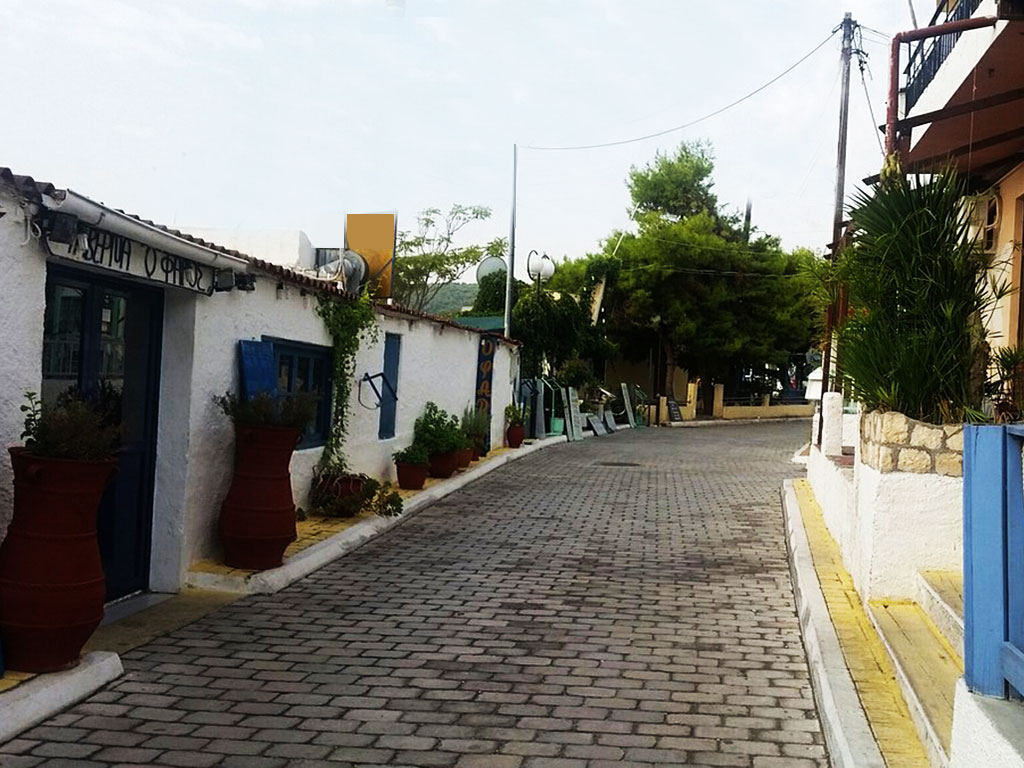
Its incredible view inspires positive emotions and grant an inner peace. Its narrow, picturesque alleys and whitewashed houses with their flower-filled courtyards are reminiscent of the famous Cycladic architecture. The large church of Agios Sostis is another must-visit attraction of Pedika.
Great to experience is also the traditional festival, held annually on the 7th of September with tavern orchestras playing traditional Greek music in almost every corner of the village. At sunset, Perdika dresses up like a queen and enchants even the most demanding suitor. This is, after all, the reason why Perdika is so popular amongst couples.
Located across the bay, 10’ away by boat, is the beautiful and uninhabited island of Moni. On it peacocks, deers and wild goats roam freely, and, depending on weather conditions, a dive in its blue-green waters is not just recommended but imperative.
Protected Historical Monument - ΦΕΚ 621/Β/7-5-1976

4. Paleochora
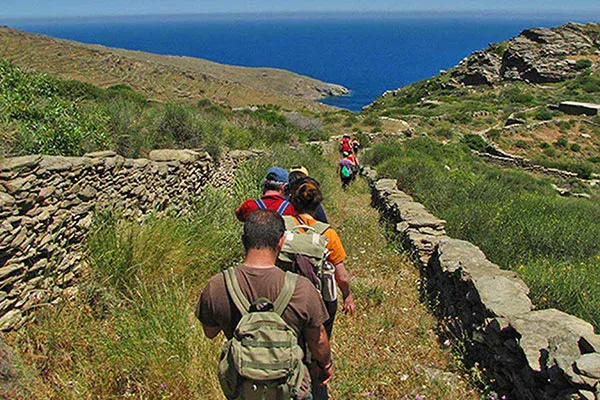
Paleochora (translating to “Old Town” in Greek) is an abandoned medieval village and one of the most popular sites on Aegina Island. Located on a barren hillside close to the Monastery of Agios Nektarios, it is dotted with the remains of a Byzantine village and according to tradition with more than 365 churches – one for every day of the year - though this figure is not confirmed by research. Historical studies indicate the existence of around 50 churches, 38 of which have survived to date and are open to visitors. You can easily spend the day wandering the hills visiting every single one of them. The churches punctuate the rocky heights of the citadel and are linked by a network of paths. Some of the churches have been renovated and parts of their frescoes have been cleaned and reestored. The houses however have been turned into ruins and there is not much of it to see today.
The hill itself was blessed with natural springs of drinking water and small stone-lined reservoirs for its storage, known as “souvales”. The valley of Mesagros below was well-watered and fertile, providing the people living in the citadel with food. The castle at the top afforded an extensive view of the Saronic Gulf, allowing forewarnings of pirate raids. Moreover, the town was well-camouflaged due to its natural building materials, which blended with the rocky landscape.
Paleochora was Aegina’s Byzantine capital for nearly 1,000 years, from the 9th century through the medieval period and was only abandoned during the 1820s. The village was inhabited in the 9th century when Saracen Arab raids forced the inhabitants of coastal settlements to abandon their villages and seek new and fortifiable refuges inland to avoid pirate raids. Paleochora flourished until 1537 when notorious pirate Khaireddin Barbarossa destroyed and burnt everything but the churches which stand still today. Gradually, the inhabitants returned to the hill and rebuilt the town. However, they lived under the fear of the pirates and the only way to survive was to join them or leave the island. In order to give an end to piracy, Venetian Fransisco Morozini, besieged Paleochora for 8 days, took 600 inhabitants with him and left the castle completely ruined. From 1800, the residents of Paleochora began to abandon the hill in order to settle around the harbor area.
Today, on the hill there are the ruins of the castle built by the Venetians in 1654 and the 38 churches that still survive. Most of them are small, single-aisle and belong to the type of the basilica. But there are also some cross-in-square churches and others dedicated to two saints and different religious doctrines. The Metropolis during the Byzantine period was the church of Panagia Fortissa. Other remarkable churches of historical and religious interest, are the church of Stavros (Holy Cross) at the entrance of the citadel, the church of Metamorphosis with a beautiful wall painting at the altar, the church of Agios Nikolaos with its remarkable wall paintings of 1330 and the monastery of Agia Kyriaki with the church and the cells. The church of Agios Dionisios offers an amazing view of both the valley below and of the opposite hillside while the church of Agii Anargyri boasts a fabulous view to the east of Aegina’s pine forest. The icons of the churches are not all in good condition but are of exceptional art and represent the dominant art tendencies from the 13th to the 18th century.
Paleochora, the so called "Mystras of the Saronic Gulf», is one of Aegina’s most atmospheric places to visit. It is 6.5 km east of Aegina Town, very close to the Monastery of Agios Nektarios. Buses from Aegina Town stop at the monastery, and if you want to visit Paleochora, you will need to hike a short path. Entrance is free but bring plenty of water with you, wear hiking shoes and a hat. In Paleochora, you can also visit the cell of Agios Dionisios of Zante, where he lived from 1567 and throughout the three-year duration of his archbishopric in Aegina. The cell still exists today, next to the church of Episkopi along with the touching inscription which is a token of love and worship of the locals to his person.
Protected Historical Monument - ΦΕΚ 332/Α/6-8-1936
5. Aegina Town
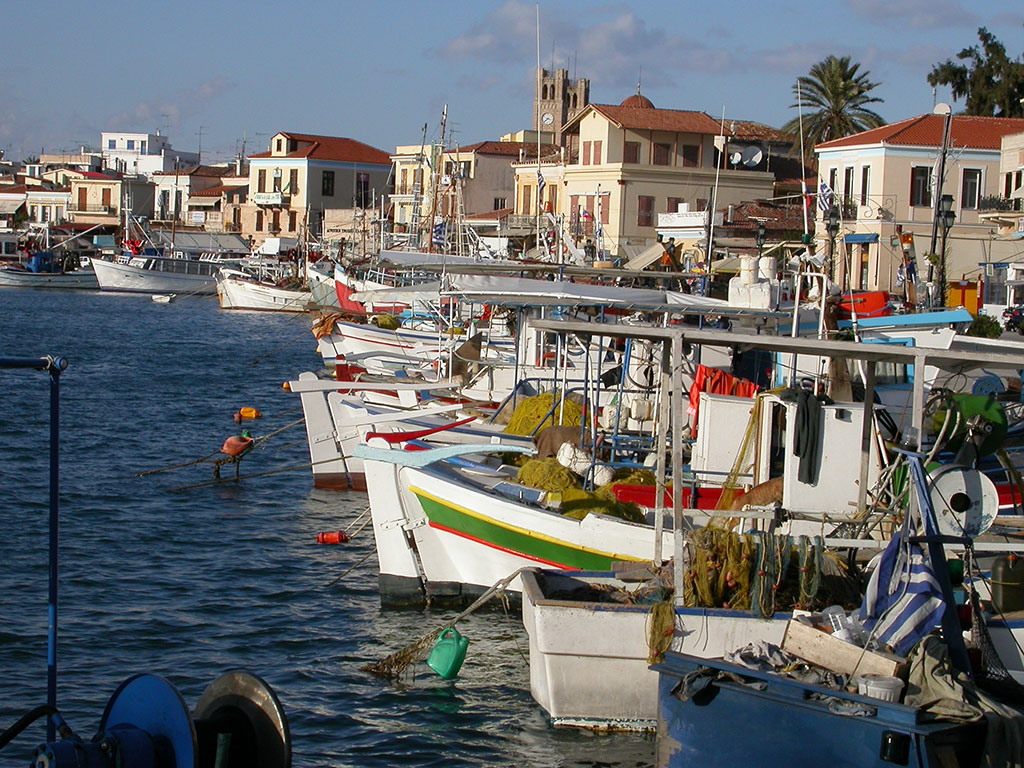
Aegina or Chora, is the capital city of the island and it's located on the west side. It's been built amphitheatrically, with all houses facing the sea. As soon as you reach the harbour, the small, white church of Saint Nikolas "welcomes" you first. Visitors will surely be mesmerised by the modern type classical buildings, which are located along the sea front of the island and have terristrial shade colours which make them look even more beautiful at sunset.
The buildings in Aegina represent the famous neoclassical architecture with traces of folk elements. They were built during the 19th century and remind us the days Aegina was once the capital city of the first modern Greek State for two years (1827-1829).
Aegina is well-known for its history and its art and craft events. The beauty of the island is undisputable and for many decades, Greek and foreign artists and literary writers paid a visit to the island for inspiration. Nowadays, on the ground floor in many of these buildings, one may find traditional coffee shops, patisseries, restaurants, shops and banks. In the narrow streets of the island, colourful houses with beautiful flowers in their courtyards and picturesque shops and taverns meet the eye. The town of Aegina is beautiful, picturesque and it curiously evokes the visitor.
The heart of Aegina is the coastal road and the parallel alleys. Take a ride with the horses and their carriages, walk in the narrow, paved streets and discover the traditional houses, the churches with the blue domes and visit the shops selling folk art. Don't miss the fish-market and the traditional restaurants that serve snacks with ouzo and tsipouro.
Locals use fishing boats not only for fishing but for seiling groceries as well. Don't forget to taste and buy the famous peanuts of Aegina. Enjoy eating fresh fish and traditional food in the fish restaurants. Also, try the patisseries which are in front of the harbour and stop in the beautiful alleys for a cup of coffee or a drink. In the enchanting night atmosphere of Aegina you will surely have fun and dance all night long at the clubs.
Protected Historical Monument - ΦΕΚ 409/Β/7-7-1965
