












Μετάφραση 
The Ancient Sunken City Beneath the Waters of Epidaurus
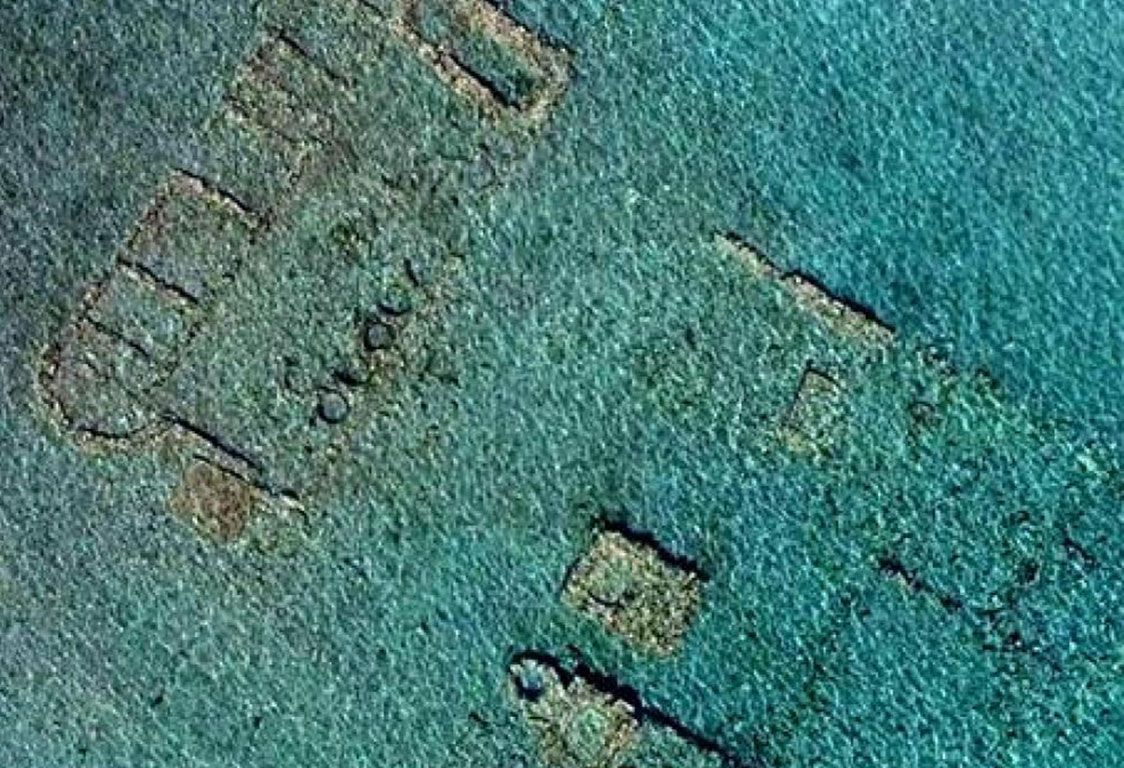
Not far from Epidaurus, famous for its Ancient Theatre with the amazing acoustics, there is an ancient sunken city. The sunken city is located just two meters below sea level in the bay of Agios Vlassios, on the beach "Kalymnios" of Ancient Epidaurus. The ancient ruins that are visible are the remains of a Roman villa (2nd century AD) close to the Agora that was located opposite the ancient port under the Acropolis of ancient Epidaurus. According to archeological research, this is a large rural Roman villa (Villa Rustica) where wealthy Romans with their servants lived .
Walls, foundations of buildings, amphorae of huge dimensions and paved sections are sunken just meters below sea level, and only few meters from the shore. The fact that an entire city is under water for so many centuries is truly fascinating. What makes the archeological site even more impressive is that visitors can literally swim in the … history. It is definitely a unique experience.
In the summer of 2017 and for the first time for a Greek underwater monument, methods of preservation of antiquities were applied, corresponding to those followed in the sunken city of Baiae in the Gulf of Naples. The walls were cleaned with special tools and special techniques were followed so as not to be damaged by marine erosion or visitors. According to the testimonies of the people of the area and with indications that the researchers have, there are more finds in the area.
The project for the protection of the monument and the findings was undertaken by archaeologist Charalambos V. Kritzas, with the help of architect Julian Whittlesey. The first aerial photography of the space was made with the use of a balloon in the 1970s. Remains of the ancient port facilities, architectural remains, remains of walls of various constructions, as well as a cluster of three buildings were recorded. Of particular interest, however, is an excellently preserved building, which is located 45 meters from the coast, with its long axis oriented from north to south. This building is the large rural Roman villa. This monument was declared an archeological site in 1998.

GPS Coordinates 37.62579, 23.15768