













Μετάφραση 
Explore the Engineering Wonder of Eupalinos Tunnel on Samos
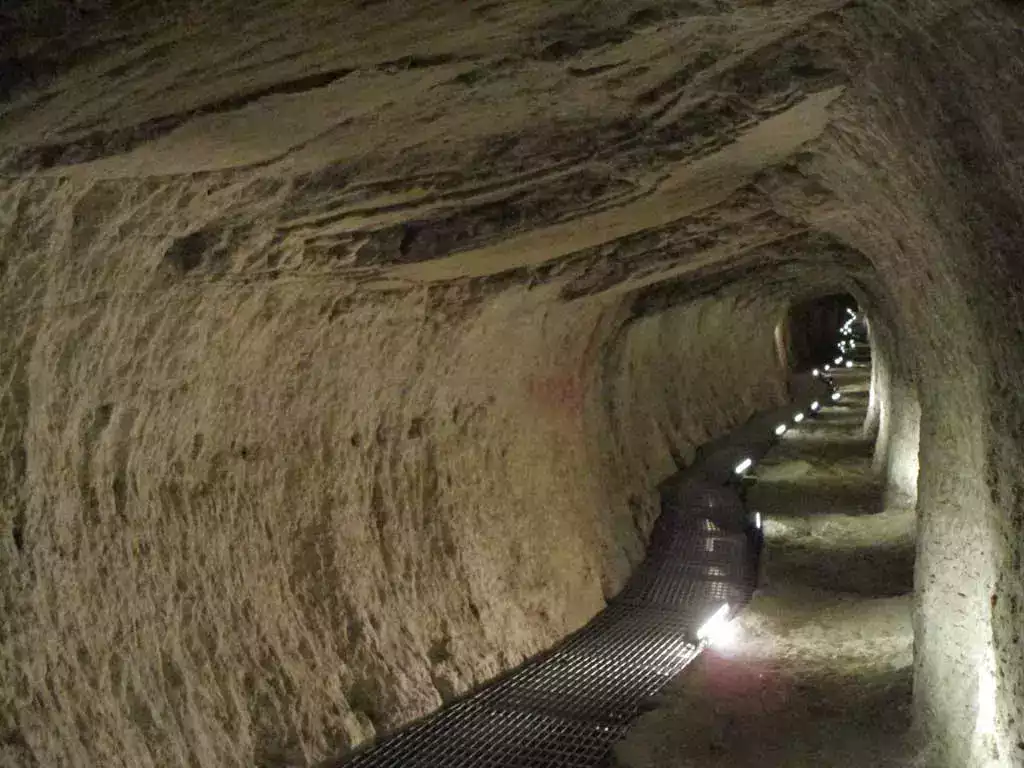
The Eupalinian Aqueduct, praised by Herodotus as one of the most remarkable achievements in engineering history, is a true wonder of antiquity. This 1,036-meter underground tunnel near Pythagoreio, Samos, was built in the 6th century BC to provide the ancient city with a secure and reliable water supply.
What makes the aqueduct extraordinary is its unique construction method: the tunnel was excavated simultaneously from both sides of Mount Kastro, using a technique called amphistomon. Against all odds, the two teams met precisely in the middle—an astonishing feat for the technology of the time.
The project was commissioned by the tyrant Polycrates of Samos around 550 BC and designed by Eupalinos of Megara, one of the most brilliant engineers of the ancient world. Measuring about 1.8 × 1.8 meters, the tunnel also contains a lower channel that carried fresh water from the Agiades spring into the city. In total, the system extended 2,385 meters, of which 1,035 ran underground. Its hidden design helped protect the water supply from potential enemies.
The aqueduct operated for nearly 1,000 years, later supplemented by a Roman aqueduct with arches stretching 15.5 km. Although described by ancient writers, the tunnel remained lost until its rediscovery in the 19th century by local abbots. The first full study was published in 1899, sparking international interest.
Since 1992, the Eupalinian Aqueduct has been recognized as a UNESCO World Heritage Site and welcomes visitors eager to step into one of antiquity’s greatest engineering accomplishments.
Visitor Tips:
Wear sturdy walking shoes, as parts of the tunnel can be slippery. If you suffer from claustrophobia, it is recommended not to enter.
Unesco Monument
-

-
Date of Inscription 1992
-
Category Cultural Site
GPS Coordinates 37.69462, 26.93011