













Μετάφραση 
Lion of Bavaria
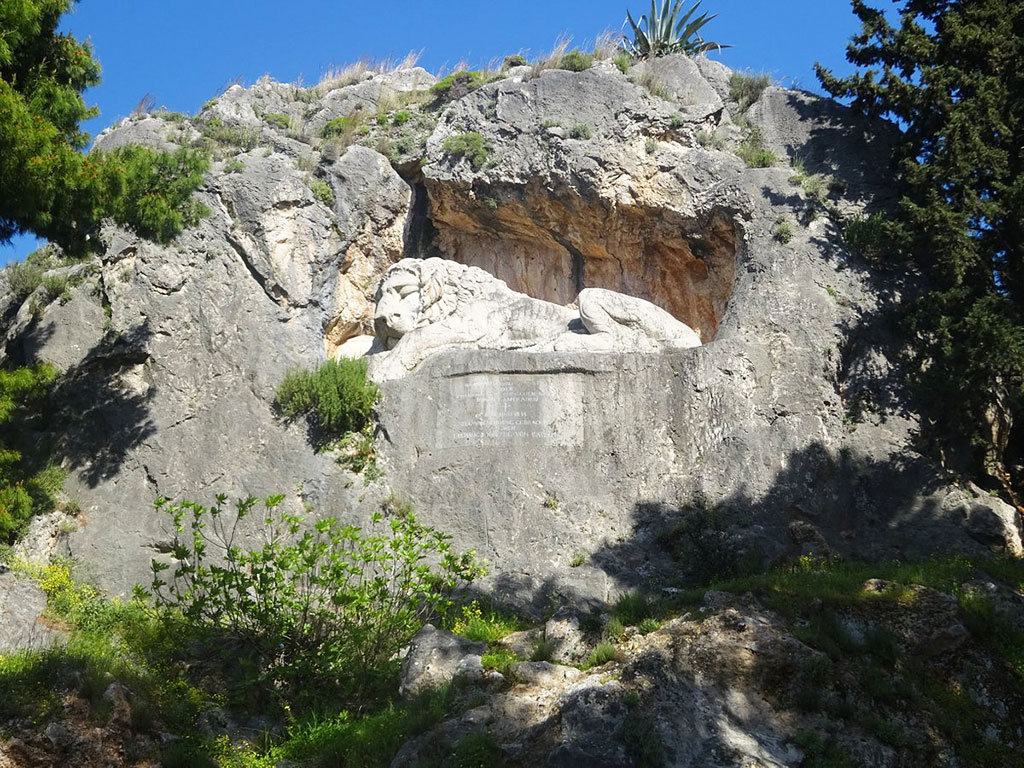
An enormous sculptural monument of exceptional art known as “The Lion of the Bavarians” is sleeping on the rock of Palamidi in the Pronoia district, close to the graveyard of Agion Panton. This monument is one of the most important sculptures of the 19th century in Greece. It was carved into the rock by German sculptor Christian Siegel between 1840 and 1841 in memory of the Bavarian soldiers, in King Otto's escort who died during the typhoid epidemic in Nafplion which devastated the area between 1833 and 1834, according to an inscription in German, engraved on the rock below the Lion. Motivated by the Lion of Lucerne of the famous Danish sculptor Bertel Thorvaldsen, Siegel carved a similar monument.
When King Otto arrived in Greece in 1833 to ascend to the throne, more than 3,500 Bavarian troops under the authority of King Ludwig, the father of the king, arrived with him to act as royal guards until an adequate local force could be recruited and trained. Later that year and through 1834, a typhoid epidemic hit Nafplion and took a great toll on the population. Many members of King Otto’s royal guard perished of the disease during that time. Many of the soldiers were originally buried in the graveyard of the Church of Agii Pantes. In 1852 their bones were exhumed and moved to the crypt of Nafplion's Catholic Church. The remaining soldiers were buried in a nearby area which is known as the Bavarian Monuments. Right in front of the monument, there is a park with benches with great view of the sculpture.

