Western Macedonia
Kozani
Μετάφραση 
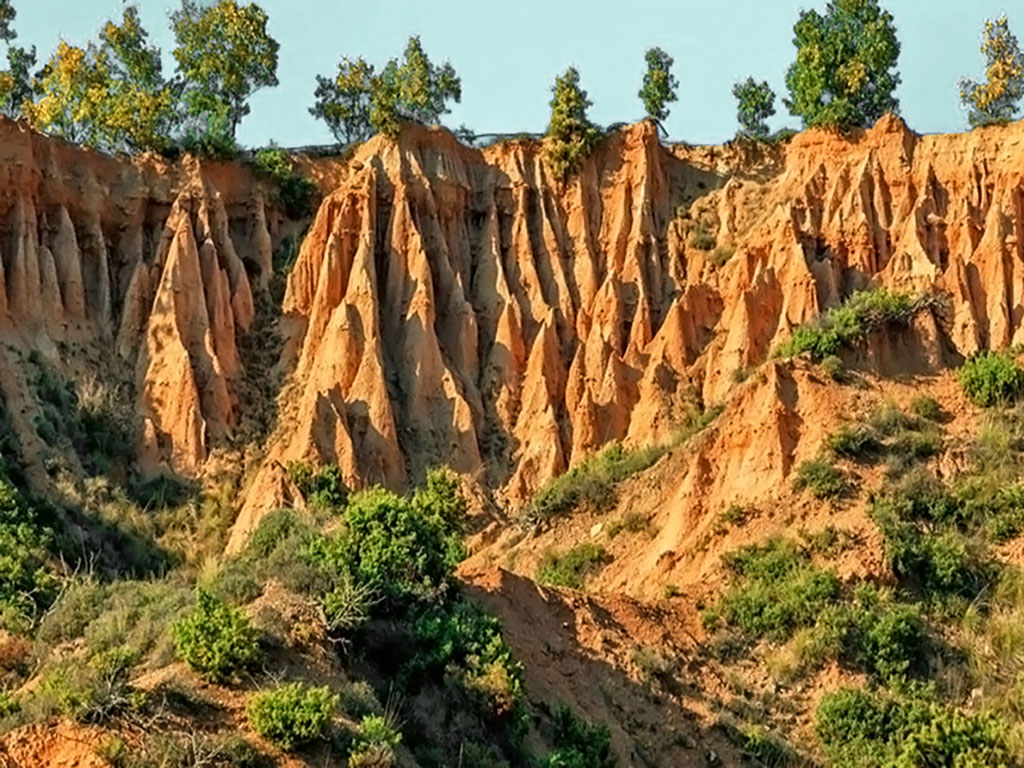
The Boucharia formations are striking geological and geomorphological structures located near Mikrovaltos in the municipality of Servia-Velvento, Western Macedonia, about 40 km south of Kozani. These unique natural formations stretch along the Potamia stream, near the border with the area of Livaderos.
The name “Boucharia” comes from their distinctive shape: in the local dialect, it means “chimney.” These formations are the result of thousands of years of soil erosion, creating towering earthen columns made of sand, marl, clay, and in some cases, adhesives containing iron oxides and silicon dioxide, according to a recent study by the University of Athens. Each column is topped with a slate rock, which acts like an umbrella, protecting the formation as it evolves over time. Geologists estimate that the Boucharia began forming around 70,000 years ago.
The Boucharia reach heights of 3–7 meters and feature slate “hats”, giving them the appearance of enormous mushrooms. Their diameter ranges from 0.5 to 2 meters, and there are roughly 20 of these spectacular columns in the area. Nearby, you can also see the “Nochtaria”, similar geological formations shaped like pyramids but without the slate hats, adding variety to the landscape.
These formations are not unique to Greece: similar structures can be found in Kosovo, Romania, and Turkey’s Cappadocia region. However, the Boucharia of Western Macedonia offer a rare and fascinating example of natural erosion and geological artistry in Greece, making them a must-see for nature lovers, photographers, and anyone exploring the Kozani region.
Learn whether this natural monument has been officially declared a protected site and discover its conservation significance.
This monument is currently not officially protected.
GPS Coordinates: 40.06258, 21.89995
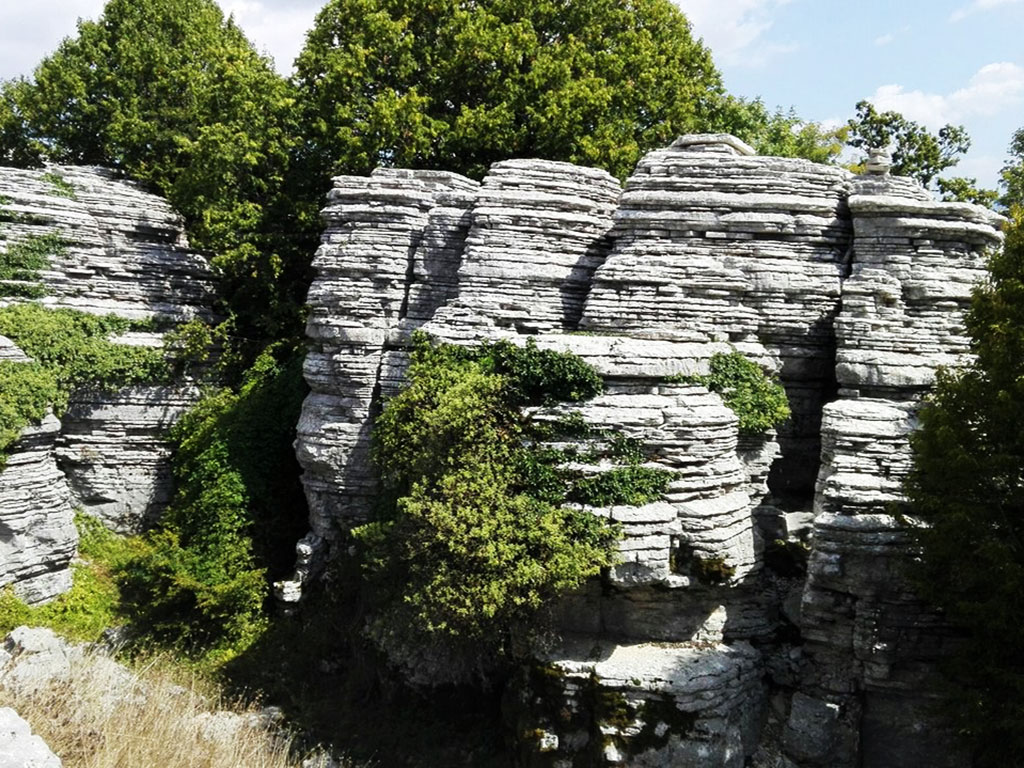 Stone Forest
Discover the Enchanting Stone Forest of Epirus, Greece
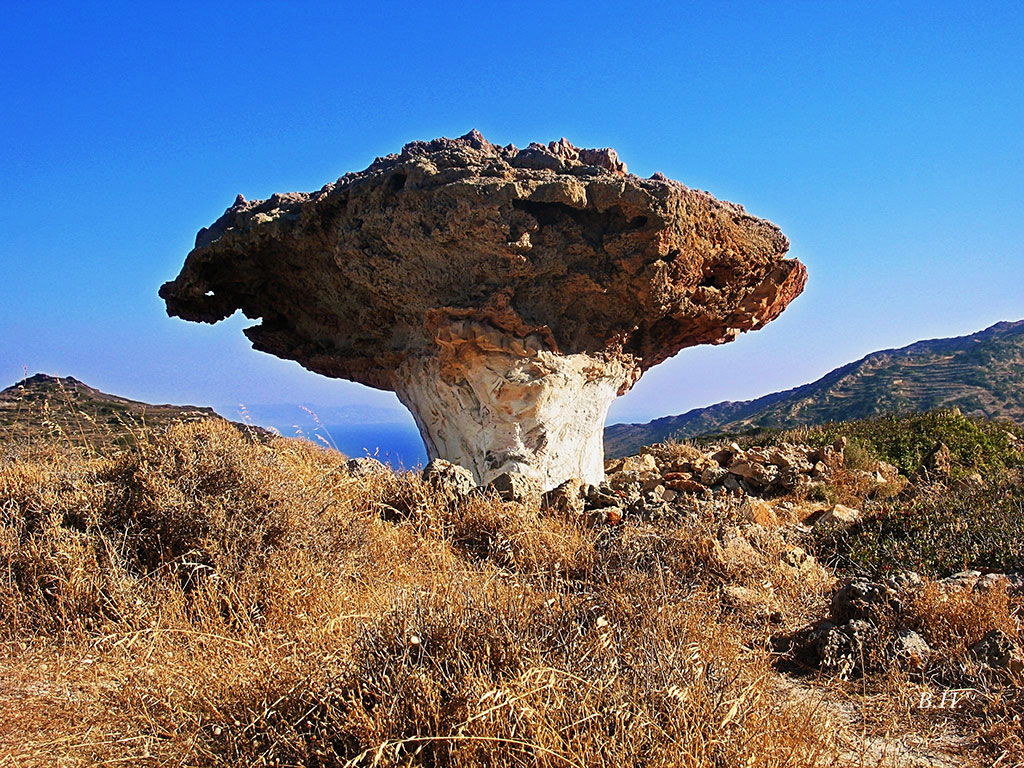 Skiadi
Skiadi Kimolos – The Famous Mushroom-Shaped Rock in Cyclades
.jpg) Nymfopetres
Nymfopetres
Nymfopetres – The Mythical Limestone Rocks near Thessaloniki
 Laopetra in Benitses
Laopetra in Benitses – The Legendary Rock of Corfu
 The Cave of the Seal
The Cave of the Seal – Hidden Wonder of the Corinthian Gulf
 Tripitos Arch Paxos
Witness Tripitos Stone Arch Standing Above the Waves
 Chaos Crater
Chaos Crater – A Heart-Shaped Crater in Sounio National Park
Discover Greece’s most breathtaking natural monuments —from spectacular caves and vast geoparks to ancient volcanoes and dramatic gorges. Explore more destinations that showcase Greece’s unique geology and landscapes.