











1. Afionas Corfu
The picturesque mountain village of Afionas is situated on the northwest coast of Corfu, around 37 km from Corfu town. The village is built on the neck of a small, green peninsula between the bays of Arillas (north) and Agios Georgios Pagon (south). The entire end of the peninsula is called the «Head of Mourgis», because its shape looks like a dog’s head.
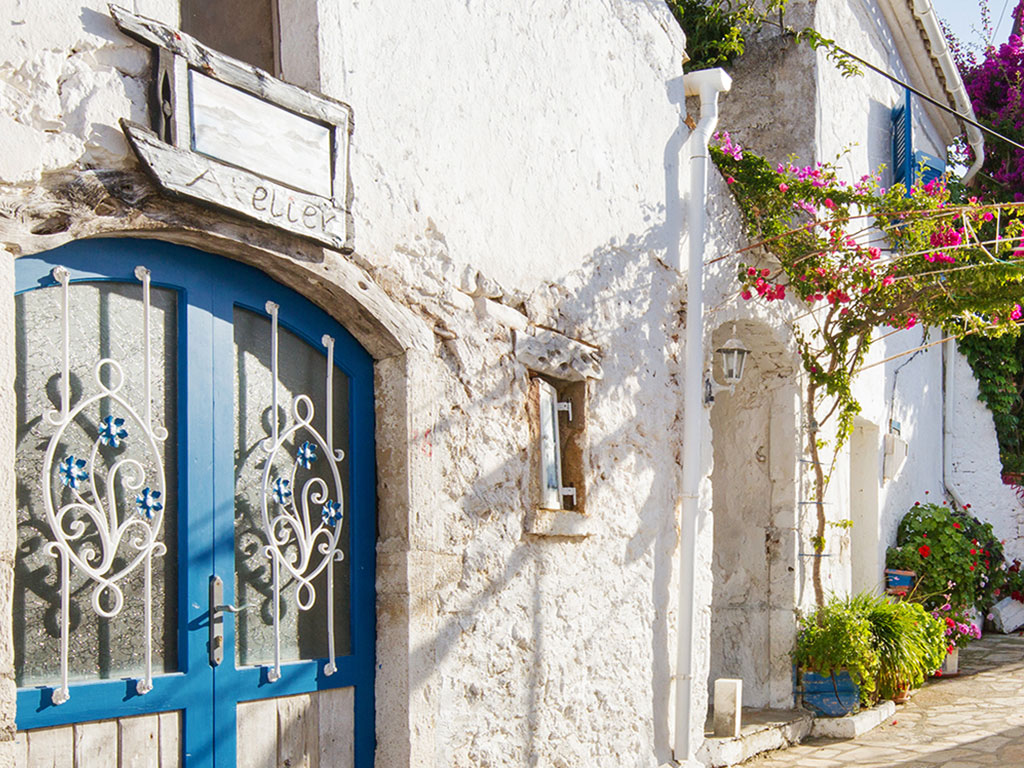
Afionas is one of the most beautiful villages of Corfu, which has remained unchanged over time with colorful houses, old mansions and many picturesque alleys called "kantounia". It is very well known for the spectacular view that it offers especially during the sunset, as it overlooks Arillas bay, the most western point of the whole Greece. There is also a nice view towards Gravia island and the Diapondia islands - Mathraki, Othoni & Erikoussa. It is considered one of the oldest settlements on the island and according to tradition, owes its name to the local grape variety.
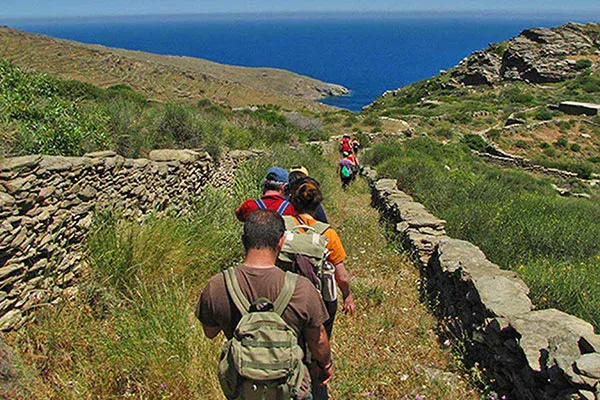
At the center of the village is the church of Agios Ioannis of Lampataris, with its imposing bell tower, built in 1636. The church celebrates on June 24. On the eve of the feast, a local custom "Lampata" takes place in the village, the custom in which the villagers light fires and jump over them. In Afionas a cultural club is active and helps with embellishing and cultural activities. Afionas also has highlights for hikers to offer - the hike to the twin bay "Porto Timoni" and further to Cape "Akra Arilla" with the chapel "Agios Stylianos" is one of the most beautiful and popular hiking tours on Corfu and offers many beautiful photo motifs. During the walk you can see ruins of fortifications which were built in the Middle Ages in order to be protected from the invasions of pirates. Archaeological findings demonstrate that Afionas was inhabited during the 6th century B.C.
Below Afionas is the famous double beach of Porto Timoni. They are essentially two beaches, separated by a narrow strip of land. The left is called Limni and the right is Porto Timoni. Access to Porto Timoni is either through the narrow paths descending from the village of Afionas, or by sea from the bay of Agios Georgios. Afionas is particularly famous for its tavernas with a great view of the Adriatic Sea, the sunset and the diapontic islands, where you can taste the famous local wine.

2. Kassiopi Corfu
Set around a scenic horseshoe-shaped harbor, Kassiopi is one of the most tourist destinations in northern Corfu. This once sleepy village, is now a lively tourist gateway which has retained its charm and has developed sympathetically to Corfu’s traditional Ionian architecture. The small village is overlooked by the remains of a Byzantine castle and offers great views of the Ionian Sea and across the sapphire channel to Albania. It is a pretty and quiet seaside village with good facilities including gift shops, cafes, banks with cash machines, supermarkets, bakeries, pharmacies, travel agents and car rentals. The pretty harbor is lined with good-quality restaurants with great views where you can sit and watch the world go by whilst enjoying a local glass of wine or a delicious Greek meal. Scattered throughout the village, you will find more excellent tavernas and bars as well as a large number of accommodation options.
Kassiopi does not have a beach in the village itself, but there are a number of shingle beaches nearby. Its four main beaches are called Kalamionas, Pipitos, Kanoni and Bataria and are all situated around the headland below the ruins of the fortress. The area also has tranquil trails, and a ruined Byzantine castle perched on a hillside overlooking the village. A small footpath leads you up to the castle, which is currently being restored. Also worth seeing is the Church of Panagia Kassopitra from the 16th century. The church is dedicated to Virgin Mary and houses an icon that it is believed to be miraculous. The church is off the main street on the right-hand side heading down towards the harbor. If you run out of things to do in Kassiopi or want to see more of the Corfu coastline, then why not take up one of the boat trips that leave from the harbor on a daily basis. On these trips, you will get to see the fascinating coastline of Corfu and visit some secluded beaches.
Kassiopi is on Corfu’s northeast coast, roughly 36 kilometers northeast of Corfu Town. The beautiful and bursting resort has something from everyone, from families to couples and groups. It is the ideal destination for those who want to explore the northern part of the island or just looking for a quiet place with a traditional atmosphere but at the same time want to enjoy some lively nights with music and dancing. This part of Corfu is particularly pretty and many people return year after year or have bought properties and spend their summer holidays.
Transport
Kassiopi is a one-hour drive from Corfu Airport and 45 minutes on the bus from Corfu Town. The village is served by Corfu’s Bus system on a daily basis. Tickets cost about €3,60 one way and be purchased from the driver or from kiosks. Buses in high season run hourly and can be used to explore nearby villages and smaller bays of the north-east coast. The bus station in Kassiopi is near the harbor front. To see the routes, the schedules and prices please visit Corfu’s Bus system official website. If you are travelling to Kassiopi with your own vehicle, you may be able to find a space in the harbor. If not, there is a car park on the outskirts of the village where you can park for a fee.
Distance Table:
- Kassiopi - Corfu Town: 36,4 kms (57 mins)
- Kassiopi - Corfu International Airport: 35,6 kms (55 mins)
- Kassiopi - Arachavi: 12,1 kms (16 mins)
- Kassiopi - Palia Perithia: 13,9 kms (25 mins)

3. Lefkimmi Corfu
Lefkimmi is the second largest village on the island after the Town of Corfu. Lying at the southern tip of the island, Lefkimmi has essentially resulted from the unification of five villages (Riglades, Anaplades, Agioi Theodoroi, Melikia, and Potami). Its port connects southern Corfu with Igoumenitsa on the opposite coast. Daily ferry services, serve all those travelling from the mainland to the south part of Corfu and vice versa. The area is known from the ancient times. At the Strait of Lefkimmi took place the famous battle between the Corinthians and the Athenians during the Peloponnesian War. Lefkimi was also the scene of a rescue operation in World War II, when a Lancaster bomber crashed. Locals rescued the crew, hid them, and then led them to a safe place where they boarded on a British submarine.
Lefkimmi is set in a fertile plain full of olive groves, citrus trees and vineyards. A river runs through the eastern part of the town where local fishermen moor their wooden boats, creating a very picturesque sight. The paved piers are lined with cafes and restaurants where you can sit and enjoy a drink or a genuine Corfiot meal. Wandering through the narrow streets you can see old mansions, Venetian-style buildings, squares and beautiful churches. To a large extent, Lefkimmi has remained untouched by mass tourism and still keeps its old traditions. You can still see old women carrying goods on their donkeys in the streets and elderly men drinking ouzo in the traditional bars. It offers a good choice of bars and restaurants; however, you can hardly find any late-night bars and clubs. If you are keen on this kind of entertainment, go down to Kavos and you won’t be disappointed.
Near the village there is a lighthouse and a salt pan, an important wetland where flamingos, egrets, and many migratory birds stop to rest. The nearest beaches are Molou bay, just 2 kilometers away and Alikes bay. Lefkimmi is connected with Corfu Town with regular bus services. The small town is overall a quiet and relaxing place away from the cosmopolitan resorts of the island.

4. Corfu Town
Easter in Corfu is unique celebration that you have to experience even for once in your life for a number of reasons: the custom of throwing "botidon" where from the balconies of the houses and the streets the residents throw the canoes full of water for to make a big noise and to expel the evil, the "Lazarus Carols" in Campello, the reconstruction of the earthquake that followed the Resurrection of the Lord, the grandiose philharmonic of the island singing mourning marches and the fireworks in the evening of Anastasis in the crowded square. Together with many other unique customs in the world, they make the city one of the best destinations worldwide.

5. Paleokastritsa
Paleokastritsa is located on the northwest coast of Corfu, 25 km from Corfu Town. It is one of the most famous tourist resorts on the island, mainly due to the fantastic beaches with the clear sea waters and to many lovely coves. They are all nestled beneath the folds of steep verdant slopes of olive groves, cypress trees and citrus orchards. Apart from the natural beauty the historical sights won’t let you down, as there are many sights dating back to the Byzantine era. The castle of Angelokastro sits at the top of a rather large rock and offers a spectacular view of the bays around Palaiokastritsa. The historic monastery of Theotokos is one of the oldest in Corfu, dating to 1225. It is built on a sheer hillside, on the western side of the central bay, facing the Ionian Sea. It is one of the most important religious monuments on Corfu as well as the most visited religious site on the island. It hosts a remarkable collection of Byzantine icons, sacred books, vestments and ecclesiastical heirlooms.
Palaiokastritsa, hands down the island’s most renowned, picturesque, and beautiful beach which stands out for the exceptional scenery. It actually consists of six small coves and beaches with the beach of Agios Spyridon to be, the most famous, biggest and crowded of all. It is a well-organized beach with sun beds, umbrellas, motor boats, watersport and canoes for rent. Here, you can also find some excellent cafés, bars and restaurants for a meal or a drink. There is an organized port where you can hire a boat and visit several lovely bays such as Alypa, Agia Triada, Agios Petros, Ambelakia and Platakia or explore the nearby coves and caves, all great points for diving and snorkeling.
The resort offers a lot of accommodation options. You can find hotels of all categories and prices, apartments, self-catering and studios. Paleokastritsa has long been considered one of the most beautiful resorts in Corfu, therefore attracts thousands of tourists every year.

6. Kalami Corfu
Kalami is a small coastal tourist resort on the northeast coast of Corfu, about 32 km from Corfu Town and 6 km from Kassiopi. The picturesque village is located in a lush area, chosen by many painters in order to capture its beautiful landscapes. For many years Kalami used to be the favorite destination and the place of residence of Lawrence Darrell, the famous author of the “Alexandria Quartet». The author's house, known as the white house, is described in the book "My family and other animals". The white villa operates nowadays as a guest house and a restaurant. The mansion of the Rothschild royal family is also located in the village.
Despite its prized reputation, Kalami still continues to maintain its sense of peace and beauty. Almost untouched by mass tourism, the area retains its pure character. Kalami is the perfect choice for relaxing vacations, families and excursions in nature.
Right in front of Kalami spreads a divine pebbly beach with crystal clear waters. A variety of water sports facilities are available, so if you like water adventure this is the right spot. Other than that, the sea around the village is a favorite spot of diving lovers due to the rocks in the sea and its amazing seabed. Along the waterfront there are many traditional tavernas serving fresh fish, small shops and cafes. Do not miss to visit the picturesque little port of Kouloura that lies almost 1 km away.

7. Palia Perithia
Palia Peritheia is situated on the attractive north east corner of Corfu, and just below Mount Pantokratoras, the tallest mountain of the island. The ruined village is the oldest example of the original mountain villages of Corfu. According to records it was first inhabited in the mid-14th century but it is believed to have been inhabited many centuries before.
Most of the approximately 130 stone houses of Palia Peritheia, built according to Venetian prototype, are now fallen into ruins. The village which is not visible from afar was built during the pirate threats in the Mediterranean and its houses are well hidden on the slopes of Pantokratoras, at an altitude of 440 meters. Approaching the ghost-village, surrounded by lush vegetation, you will feel the atmosphere of the past and you will step back in time wandering among ruined mansions covered with wild grass and trees, narrow stone paved alleyways and numerous old churches. It is said that the village was named after the many churches surrounding it in a circular way: peri (around) + theia (holy)= Peritheia.
It is worth visiting the old school, a building of special architectural interest. In Foros, the main square of the village, you will find tavernas serving delicious home-cooked meals during weekends in the summer months. Palia Peritheia was permanently abandoned by its inhabitants during the 60s when the last families settled in the seaside, contemporary village. In recent years an effort has been made for the restoration of many of the houses since the owners are trying to bring the village back in life. The village which is best visited by car is 8 km away from Kassiopi and 50 km from the city of Corfu.
Protected Historical Monument - ΦΕΚ 210/Β/1-3-1980

8. Corfu Old Town
Protected Historical Monument - ΦΕΚ 445/Β/29-6-1970

9. Palies Sinies Corfu
One of the ruined and abandoned settlements in northern Corfu, Palies Sinies, is still standing, resisting the passage of time, at the foot of mount Pantokratoras. It is at a distance of about 40 kilometers from the city of Corfu and less than 10 from Kassiopi. It is quite possible that the houses in Palies Sinies have been standing since the 17th century, while the village was abandoned in the 60s, when the inhabitants moved to Nissaki, the modern, seaside village, one of the most visited in northern Corfu.
Today, wild ivies and prickly bushes have surrounded the mansions of another time of Palies Sinies, while the churches of the village that still stand are decorated with great murals that attract the interest of visitors. The area where Palies Sinies is situated is of course hard to access, as it was built in this spot because of fear of pirates who ravaged the coastal areas, but it is worth visiting, especially if you are hiking enthusiasts.

10. Lakones Corfu
The little village Lakones lies on the north west coast, about 25km from Corfu town. It is a listed, traditional, picturesque village with a long history, built on the slope of a verdant mountain, offering impressive views of the coves of Palaiokastritsa. Old stone houses of the 18th and 19th centuries on both sides of the narrow main road, cobbled streets, colored shutters and elderly women still wearing traditional Greek dresses, compose the scene of the picturesque village.
Although there is more than one theory as how the name derived, the most common one says that it came from the first inhabitants of the village who were from Lakonia in Peloponnese. On their trip to Southern Italy, they were caught in a storm and they settled on the coast, in the place where Palaiokastritsa lies now. But due to the fear of pirate raids they moved the village to the mountainous area. According to another theory the name derives from the Michala family with origin from Oitylo. This family was the first to settle in the village after being chased from Lakonia.
For hiking lovers there is a path that connects Lakones with Paleokastritsa. On the road towards the village there are plenty of viewing points and it is well worth stopping off to see the spectacular view. One of the most important attractions, is the Folklore Museum, housed in the building of the Music Club "Lakonites". It hosts a large collection of photographs, traditional costumes, everyday objects and archives. In Lakones you can find some traditional cafes and tavernas as well as a few small hotels and rooms to let.

11. Agios Stefanos Corfu
Agios Stefanos Sinion is a small traditional fishing village with a picturesque harbor. It is set in a peaceful bay, surrounded by verdant hills, on the northeastern coast of Corfu between the beaches of Kerasia and the famous Kassiopi from which it is only 3 km away.
Overlooking the Ionian Sea, Agios Stefanos has been established as a first-class resort. The majority of the accommodation is built on its slopes and is based in private villas owned by affluent Greeks and foreigners. The wider area from Barbati to Avlaki has been dubbed "Kensington-on-Sea" by the English press and media. It is named after the famous Kensington area of London which wealthy tourists prefer to frequent.
It is a quiet destination, with buildings that retain their traditional architecture. Combined with the more modern elements of the luxury villas, give the village a unique color. The village is an ideal destination for families and for all kind of people who seek peace and relaxation while enjoying the atmosphere of the lush and stunning landscape.
On the left side of the bay there is a small, pebbly beach where parasols and sun beds are available. Along the coast there are a few cafes and bars as well as some traditional tavernas, all ideally located on the harbor front, offering traditional food and fresh fish. The tiny village is quite far from the main road from where the buses pass, heading to Kassiopi and to the city of Corfu, so a car would be useful for local transportation and for exploring the picturesque villages and the beautiful unspoiled beaches around the area.
North of Agios Stefanos, are situated two important ecosystems, lake Akoli and lake Vromolimni, which are connected by a network of paths that lead to some of the most beautiful and secluded beaches of the island in the area of Erimitis. At the end of the trail is the tranquil Avlaki beach.
12. Agii Deka Corfu
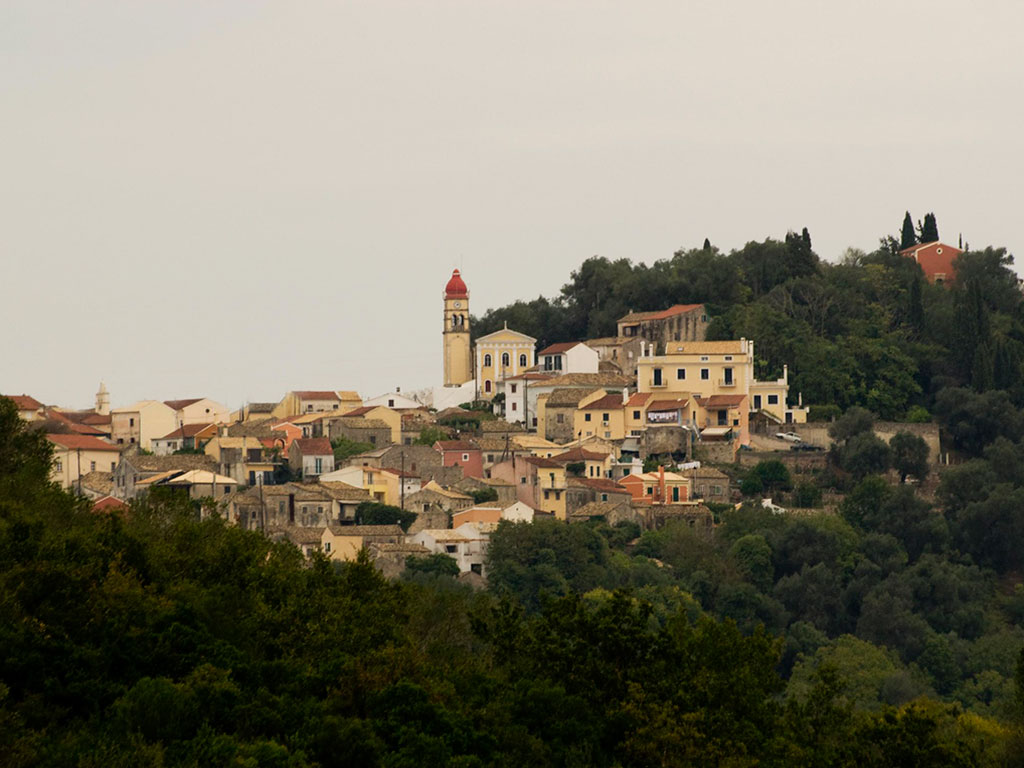
The picturesque village of Agii Deka (Ten Saints) nestles on a hill some 150 meters above sea level, on the eastern slope of the namesake Agii Deka Mount, 12,8 km (25 mins) south of Corfu Town. The village was founded by Cretans who moved to Corfu after the conquest of Crete by the Arabs in 823 AD. It is believed that it was those Cretans who brought the icon of the Holy Ten Martyrs to Corfu, from where the village took its name.
Agii Deka is a quiet village that retains elements of its traditional Corfiot architecture with scenic alleys, old stone houses and shops. It is one of the most charming villages of the island with breathtaking views of the surrounding area, the neighboring villages, Corfu Town, and the airport. There is not much to do in Agii Deka, apart from wandering through the narrow alleys and tasting the authentic Corfiot cuisine in one of the traditional tavernas of the village. The village's beauty inspired Oscar Wilde in 1877 to write the poem "Santa Decca".

13. Liapades Corfu
The village of Liapades is a traditional agricultural village with a local Corfiot population, situated slightly inland and uphill. It is one of the nicest traditional villages of Corfu in the west coast approximately 18 km from Corfu Town. This pretty little village is surrounded by stunning pine-forested hills and despite the tourist development, retains its traditional and architectural elements with beautiful houses from the 18th century and narrow streets. The village of Liapades is small, but cozy. Even though it is different from the classic image of Greece with white houses and blue roofs, it has everything you need for a good rest. There are taverns, cafés and shops which cover all the needs a visitor may have but has also some stunning beaches nearby.
The village is divided into two parts, the old village where most of the locals live and the tourist area with a cluster of tourist accommodation and facilities. On the central square you can experience the Greek way of life on the traditional small cafes and bars and visit the church of Agia Anastasia of the 16th century with its beautiful, religious paintings and old icons. Not far away from Liapades there are many places to visit including the well-known Paleokastritsa. Liapades has two main beaches. One – Liapades (Gefyra) beach – is easy to reach and is more popular among tourists than the other one. From there you can also visit by boat some other unorganized coves and beaches in the area such as Rovinia, Klimatia, Iliodoro and Limni beach.
With stunning natural surroundings and a traditional feel, Liapades is a great place to visit and stay. If you visit it by car, you should take extra care as the roads are verry narrow. Liapades is also famous for its wine with the ubique color and flavor.
Protected Historical Monument - ΦΕΚ-594/Δ/78, 1053/Δ/92
.webp)
14. Chlomos Corfu
The mountain village of Chlomos is considered to be one of the most picturesque villages on the island of Corfu. It is an old traditional Greek village up on the side of a steep hill, about 4km from Mesonghi. Built at an altitude of 270 to 320 meters above sea level, it is also referred as the “Balcony of Corfu” because of the spectacular views of Southern Corfu and the eastern coastline, even of the islands of Paxos and Antipaxos on a clear day. Besides the beautiful views, the village features pretty narrow streets and old houses, built according to the Venetian architecture. The houses are spread around the main square and most of them are painted with vibrant colors. Moreover, you can find many mansions dotted around the cobblestone alleys. Of historic interest is the mansion of Thomas Palaiologos, brother of the Byzantine Emperor Constantine Palaiologos.
On the way to the village, you will enjoy a stunning view of Lake Korission from above. The lake covers an area of 6,000 acres and is one of the most important wetlands on the island. The village was built in the 13th century and according to tradition, it owes its name to the people who came here from the lake area at the beginning of the 19th century, and were plagued by malaria so consequently had ‘pale’ faces. The story of the village however, starts long before the 13th century as evidenced by findings in several places on the slopes of the mountain. The findings include an altar dedicated to God Apollo in the place where is now the Church of the Archangels. The village boasts some cafes and traditional tavernas with delicious Greek and Corfiot food. Accommodation options are limited but there are some private villas to rent, however most of the villas and studios are situated near the sea, around 5km away. Chlomos is located 31km south of Corfu Town, on the east side of the Morovigli mountain. The nearest beach to visit is Boukari beach but there are many more lovely beaches nearby, such as Mesonghi, Moraitika and Benitses on the east coast as well as Halikounas on the west coast. Chlomos village is a hidden gem in the inland of Corfu, that is worth to visit.
